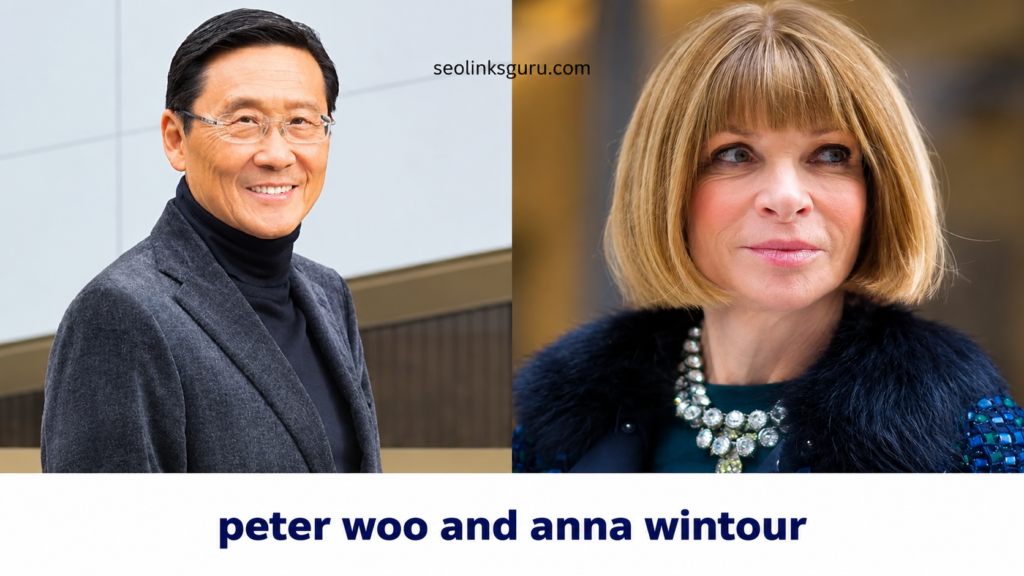

Peter Woo and Anna Wintour are two prominent figures associated with different sides of the international luxury industry. Peter Woo is a Hong Kong businessman known for his leadership in property, investment, and retail. Anna Wintour is a British-American fashion journalist and media executive whose work at Vogue helped shape modern fashion publishing. Although their professional backgrounds differ, both are associated with industries that influence luxury brands, consumer culture, and international business.
People searching for Peter Woo and Anna Wintour often want to understand who they are, what they have achieved, and whether they share a personal or professional relationship. It is important to separate documented facts from assumptions. Their careers can be compared through their involvement in the luxury economy, but that does not automatically establish a direct connection between them.
This article explores their backgrounds, professional achievements, influence on fashion and business, and the reasons their names may appear together in online searches. It also explains what readers should know before accepting claims about their relationship.
Table of Contents
- Who Is Peter Woo?
- Who Is Anna Wintour?
- What Connects Peter Woo and Anna Wintour?
- Their Influence on the Luxury Industry
- Why People Search for Peter Woo and Anna Wintour
- Important Facts About Their Careers
- Frequently Asked Questions
- Conclusion
Who Is Peter Woo?
peter woo and anna wintour is a Hong Kong businessman whose career has been associated with property development, corporate investment, and commercial retail. He became widely recognized through his leadership of major businesses, including Wheelock and Company and The Wharf (Holdings). These companies have played important roles in Hong Kong’s commercial property and business landscape.
Woo’s professional background reflects the relationship between investment, property ownership, and economic development. Large commercial properties can include shopping centers, office buildings, and other spaces used by businesses and consumers. Managing these assets requires long-term planning, financial decisions, and an understanding of changing market conditions.
His career is also associated with luxury retail through the Woo family’s interests in the Lane Crawford Joyce Group. Lane Crawford is known for its position in high-end fashion retail in Asia. This connection helps explain why Peter Woo sometimes appears in discussions about luxury brands, fashion businesses, and influential figures in international commerce.
Peter Woo’s Business Background
Woo built his reputation primarily through business leadership rather than public entertainment or fashion journalism. His work involved overseeing major corporate interests and making decisions that affected investment, property, and retail operations.
Commercial property can influence how people experience a city. Shopping centers, for example, bring retailers, restaurants, services, and customers together. Successful developments can become important parts of urban life while also generating commercial value for their owners.
Woo’s career illustrates how business leaders can influence consumer markets without working directly in creative industries. Although fashion designers create products and editors help communicate trends, retailers and property businesses provide important parts of the commercial environment in which those products reach customers.
His Connection to Luxury Retail
Luxury retail focuses on premium products, carefully selected brands, customer experience, and distinctive shopping environments. Businesses operating in this sector often depend on strong relationships with designers, suppliers, and customers.
Lane Crawford’s association with the Woo family places Peter Woo’s wider business background within this environment. However, it is important not to confuse a family business connection with personal responsibility for every decision made by a retail company.
His professional influence is therefore best understood through corporate leadership, investment, and the wider business interests associated with his family. These are distinct from the editorial responsibilities that define Anna Wintour’s career.
Who Is Anna Wintour?
Anna Wintour is a British-American fashion journalist and media executive best known for her long association with Vogue. Born in London in 1949, she entered fashion journalism early in her career and later moved to the United States, where she held editorial positions at several publications.
Wintour became editor-in-chief of American Vogue in 1988. During her tenure, the magazine developed a distinctive editorial identity that combined high fashion with celebrity culture, photography, popular entertainment, and contemporary social trends.
Her work extended beyond selecting magazine covers or overseeing articles. Fashion publishing involves decisions about which designers receive attention, how collections are presented, and how fashion relates to broader cultural conversations. Wintour became one of the industry’s most recognizable figures through this combination of editorial judgment and media leadership.
Anna Wintour’s Career at Vogue
Wintour’s appointment to lead American Vogue marked a major stage in her career. Under her editorial leadership, the publication became known for combining fashion photography with coverage of celebrities, designers, and cultural figures.
Magazine covers can influence public awareness of particular people, collections, and styles. Editorial features can also introduce readers to emerging designers and help established fashion houses maintain visibility. These effects are not limited to one publication, but Vogue has long been an important part of international fashion media.
In 2025, Wintour stepped down from her position as editor-in-chief of American Vogue. She continued in senior leadership roles at Condé Nast, including global editorial director of Vogue and chief content officer. These responsibilities distinguish her continuing work from the day-to-day editorial leadership of the American edition.
Her Influence Beyond Magazine Publishing
Wintour’s influence extends into fashion events, designer relationships, and cultural institutions. She is particularly associated with the Met Gala, an annual fundraising event supporting the Costume Institute at the Metropolitan Museum of Art in New York.
The event brings together fashion, art, entertainment, and philanthropy. Designers create distinctive looks for guests, while photographers and media organizations distribute images to audiences around the world. This makes the event both a cultural occasion and a major moment for fashion communication.
Her career demonstrates that influence in fashion does not depend solely on owning brands or selling products. Editorial decisions, public visibility, and relationships with creative professionals can also shape how people understand luxury and contemporary style.
What Connects Peter Woo and Anna Wintour?
The main point to understand about Peter Woo and Anna Wintour is that their careers touch the wider luxury industry in different ways. Woo is associated with business leadership, property, investment, and luxury retail. Wintour is associated with fashion journalism, editorial strategy, and international media.
Their professional fields can overlap at the industry level. Fashion retailers need customers to discover and desire the brands they sell. Fashion publications help introduce collections, communicate trends, and create awareness around designers. Both activities contribute to the larger system that supports luxury goods.
However, a shared industry does not prove a direct relationship. Publicly available biographical information does not establish that Woo and Wintour are relatives, romantic partners, or confirmed direct business partners. Claims suggesting otherwise should be supported by reliable reporting or official documentation before being treated as facts.
Are They Business Partners?
There is no established public evidence confirming a direct business partnership between Peter Woo and Anna Wintour. Their professional interests belong to connected but distinct areas of the luxury economy.
Woo’s business background centers on commercial ownership, investment, and retail-related interests. Wintour’s work centers on media leadership, editorial decisions, and relationships with designers and cultural organizations.
Companies and publications can participate in the same industry without their senior figures sharing ownership or working together directly. For example, a fashion retailer may stock a designer’s products while a magazine publishes an editorial feature about that designer. Such activity reflects an industry relationship, not necessarily a partnership between the people who lead those organizations.
Are They Related Personally?
No reliable public information establishes a family relationship between Peter Woo and Anna Wintour. Their documented biographies describe different family backgrounds and professional lives.
It is important to avoid treating search results, repeated online claims, or shared appearances within an industry as evidence of a personal relationship. A trustworthy account should rely on credible interviews, official biographies, or reputable news reporting when discussing private or family matters.
For readers interested in both figures, the most useful approach is to examine their individual achievements and the industries in which they work. This provides a clearer understanding than attempting to create a personal connection that has not been established.
Their Influence on the Luxury Industry
Peter Woo and Anna Wintour offer two different perspectives on how the luxury industry operates. One is associated with commercial leadership and retail-related business interests. The other is known for editorial influence and fashion communication.
Luxury products depend on more than design alone. Businesses must manage production, distribution, retail locations, marketing, and customer relationships. Publications and media organizations help consumers learn about designers, collections, and new trends.
These activities support different stages of the same broad commercial system. Nevertheless, their individual responsibilities should not be confused. Woo’s business history does not make him a fashion editor, just as Wintour’s editorial influence does not make her the owner of every brand featured in Vogue.
How Business Leadership Shapes Fashion Retail
Retail businesses help connect luxury brands with consumers. Their decisions can involve store locations, product selection, customer service, and investment in shopping environments.
For luxury retailers, brand reputation and customer experience are especially important. Customers may expect carefully selected merchandise, knowledgeable staff, and stores that reflect the image of the products being sold.
Business leaders influence these operations through investment priorities and corporate strategy. Woo’s association with Hong Kong’s business and retail landscape illustrates how commercial leadership can contribute to the environment in which luxury products are sold.
How Fashion Media Shapes Consumer Interest
Fashion media operates through storytelling, photography, interviews, reviews, and coverage of industry events. Publications introduce readers to designers and help explain the ideas behind collections.
Wintour’s career at Vogue illustrates the reach that editorial leadership can achieve. Decisions about coverage influence which people and creative projects receive attention, although consumers ultimately make their own choices about what to buy and wear.
Media attention can also extend beyond clothing. Fashion publishing often connects style with film, music, art, travel, and social issues. This broad approach helps explain why leading fashion editors can become influential cultural figures even when they do not own fashion brands themselves.
Why People Search for Peter Woo and Anna Wintour
There are several possible reasons people search for Peter Woo and Anna Wintour together. The most obvious is their association with the luxury industry, although their roles differ considerably.
Readers researching influential businesspeople may encounter Woo while exploring luxury retail, property, or wealth. People researching fashion publishing may encounter Wintour through Vogue, designer coverage, or the Met Gala. Comparing their names can help readers explore the business and media sides of the same broad market.
Another possible reason is curiosity about whether the two have a personal connection. Search engines often display pages that combine well-known names, particularly when they share professional interests. However, a combined search phrase does not establish that a relationship exists.
The Role of Online Search Results
Search engines organize information around the words people enter. When two prominent names appear together in a query, results may include biographies, comparisons, and articles discussing possible connections.
Some pages provide useful context, while others may repeat unsupported claims. Readers should look beyond headlines and examine the evidence behind statements about relationships, wealth, family history, or professional partnerships.
A credible article should distinguish between confirmed information and reasonable interpretation. In this case, comparing Woo’s business background with Wintour’s media career is informative, but claiming a direct personal relationship without evidence would be misleading.
Important Facts About Their Careers
Understanding the differences between Peter Woo and Anna Wintour makes it easier to assess information about them. Their public profiles developed through separate professional paths, and their influence comes from different forms of expertise.
Woo is primarily associated with business leadership, investment, commercial property, and luxury retail interests. Wintour is known for fashion journalism, editorial leadership, and her role within Condé Nast.
Neither career should be reduced to a single connection with luxury. Woo’s professional background includes broader corporate interests, while Wintour’s work involves publishing and cultural leadership beyond the products sold by fashion retailers.
Why Accurate Biographical Information Matters
Public figures attract attention, and that attention can lead to inaccurate descriptions of their personal lives. Once an unsupported claim appears online, other websites may repeat it without independently checking the original information.
Readers can reduce this risk by looking for established news organizations, official company announcements, and reliable professional biographies. They should also check publication dates because roles and responsibilities can change over time.
For example, Wintour’s change in American Vogue editorial leadership in 2025 is an important distinction when describing her current position. Similarly, descriptions of Woo should reflect his documented business history rather than assume that every company associated with his family is directly managed by him.
Frequently Asked Questions
1. Who is Peter Woo?
Peter Woo Kwong-ching is a Hong Kong businessman known for his leadership roles in major companies, including Wheelock and Company and The Wharf (Holdings). His business background includes property, investment, and luxury retail interests.
2. Who is Anna Wintour?
Anna Wintour is a British-American fashion journalist and media executive. She led American Vogue as editor-in-chief from 1988 until 2025 and continues to hold senior positions at Condé Nast.
3. Are Peter Woo and Anna Wintour related?
No reliable public information establishes a family relationship between Peter Woo and Anna Wintour. Their documented biographies describe separate family backgrounds.
4. Have Peter Woo and Anna Wintour worked together?
A direct business partnership between them has not been established in the publicly available information reviewed. Their careers are associated with different areas of the wider luxury industry.
5. Why are Peter Woo and Anna Wintour mentioned together?
Their names may appear together because both are influential in areas connected with luxury and fashion. Woo is associated with business and retail, while Wintour is known for fashion publishing and media leadership. This overlap does not establish a personal relationship.
Conclusion
Peter Woo and Anna Wintour have built influential careers through different professional paths. Woo is known for corporate leadership, investment, property, and luxury retail interests in Hong Kong. Wintour has influenced international fashion through her long career at Vogue and her continuing senior responsibilities at Condé Nast.
Their careers illustrate how business ownership and fashion media contribute to the wider luxury economy. Retailers help connect brands with consumers, while publications communicate trends, promote creative work, and influence cultural conversations.
The key takeaway for anyone searching for Peter Woo and Anna Wintour is to distinguish professional overlap from a documented personal relationship. Their work can be compared meaningfully, but the available public information does not establish that they are relatives, romantic partners, or direct business partners. Understanding their individual backgrounds provides a more accurate picture of their achievements and influence.