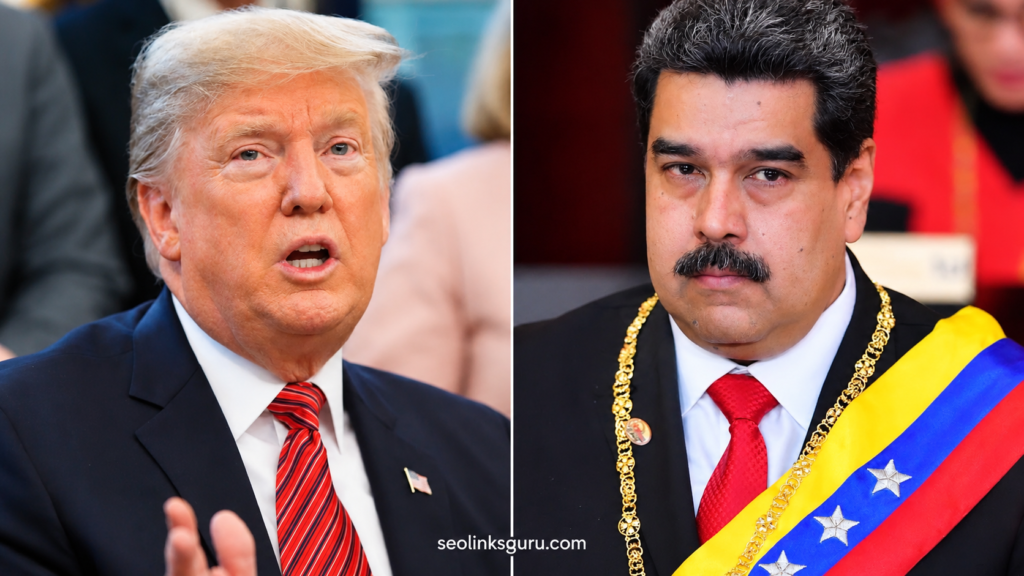

The relationship between Donald Trump and Venezuela has become one of the most important stories in international politics. Since Trump returned to the White House, his administration has taken major steps that have changed the country’s political and economic direction. These developments have attracted attention from American voters, international leaders, investors, and people following global energy markets.
The topic of Trump Venezuela covers several important issues. These include the removal of former Venezuelan president Nicolás Maduro, the leadership of interim President Delcy Rodríguez, American influence over Venezuelan oil, and discussions about future democratic elections. The relationship has moved from years of political hostility toward a complicated period of cooperation and negotiation.
As of November 2026, Washington and Caracas are working together on several political, economic, and security matters. However, important questions remain about Venezuela’s future leadership, national independence, economic recovery, and democratic institutions.
This article explains the latest developments involving Trump and Venezuela, the background behind the relationship, the importance of the oil agreement, and what these changes could mean for both countries.
Table of Contents
- What Is Happening Between Trump and Venezuela?
- How Nicolás Maduro’s Removal Changed Venezuela
- Donald Trump’s Relationship With Delcy Rodríguez
- The Venezuela Oil Agreement and American Interests
- Economic Challenges Facing Venezuela
- Democracy, Elections, and Political Opposition
- Why Trump Venezuela Matters to the United States
- What Could Happen Next?
- Frequently Asked Questions
- Conclusion
What Is Happening Between Trump and Venezuela?
The relationship between trump Venezuela has changed significantly during 2026. For many years, the United States and Venezuela experienced serious political disagreements. Washington criticized the Venezuelan government over democratic restrictions, political arrests, economic problems, and disputed elections.
The situation changed dramatically on January 3, 2026, when American forces captured Nicolás Maduro and his wife, Cilia Flores, during a military operation in Caracas. They were taken to the United States to face criminal charges. Maduro has denied the allegations against him.
Following Maduro’s removal, Vice President Delcy Rodríguez became Venezuela’s acting president. Her administration began dealing directly with Washington, creating a new political situation for both countries.
A Major Change in American Foreign Policy
The Trump administration initially maintained a strong position against Venezuela’s previous leadership. However, its approach later shifted toward cooperation with Rodríguez’s interim government.
American officials presented a broader plan involving political stabilization, economic recovery, reconciliation, and eventually democratic elections. This approach aimed to influence Venezuela’s future while maintaining American economic and security interests.
In March 2026, the United States and Venezuela agreed to restore diplomatic and consular relations. This was a significant development because diplomatic relations had been severed in 2019.
Why the Situation Matters
Venezuela has some of the world’s largest proven oil reserves. Its political situation therefore affects international energy markets, regional security, and relations between major countries.
The country’s future also matters to millions of Venezuelans who have experienced economic hardship, political uncertainty, and migration. Any major political change could affect their living conditions and future opportunities.
How Nicolás Maduro’s Removal Changed Venezuela
Nicolás Maduro led Venezuela from 2013 until his removal in January 2026. His government faced years of criticism over economic management, political restrictions, and disputed electoral processes.
The country’s economic problems became particularly severe during his leadership. Inflation, shortages, declining public services, and reduced economic opportunities contributed to a major humanitarian and migration crisis.
Maduro’s removal created a new chapter in Venezuela’s political history. However, removing a president does not automatically solve the country’s long-standing problems.
The January 2026 Military Operation
The American operation on January 3 changed the balance of political power in Venezuela. Maduro and Cilia Flores were taken to New York, where they face criminal proceedings.
The operation attracted international attention and raised questions about sovereignty, international law, and the limits of American military power.
Supporters of the operation viewed Maduro’s removal as an opportunity for political change. Critics questioned the legality and consequences of using military force inside another country.
Delcy Rodríguez Takes Leadership
After Maduro’s removal, Delcy Rodríguez assumed the position of acting president. She had previously served as vice president and held important government responsibilities.
Her leadership placed Venezuela in an unusual position. She was connected to the previous government but also became Washington’s main political partner during the transition.
Her administration has faced pressure to introduce reforms, release political prisoners, improve economic conditions, and prepare the country for credible elections.
Donald Trump’s Relationship With Delcy Rodríguez
Donald Trump’s relationship with Delcy Rodríguez has become a central part of the changing situation in Venezuela.
Although their political backgrounds are very different, both governments have found reasons to cooperate. The United States wants progress on political reforms, energy production, and regional security. Rodríguez’s administration wants international recognition, investment, and economic stability.
This relationship demonstrates how international diplomacy can change when governments identify shared interests.
Diplomatic Cooperation
In March 2026, both countries restored diplomatic relations. This decision opened the door to more direct communication between American and Venezuelan officials.
The Trump administration subsequently recognized Rodríguez as Venezuela’s head of state for diplomatic purposes. American officials also continued emphasizing the importance of a democratic political transition.
Secretary of State Marco Rubio has played an important role in discussions with Venezuelan representatives. His diplomatic approach has focused on institutional reforms, reconciliation, and election preparations.
Political Pressure Remains
Cooperation does not mean that every disagreement has disappeared. Washington continues to demand improvements in Venezuela’s political system.
The Trump administration has also made clear that its support depends on progress toward political and institutional changes.
Rodríguez must balance these American expectations with domestic political pressures. This makes her position challenging because different groups inside Venezuela have different expectations for the country’s future.
The Venezuela Oil Agreement and American Interests
Oil is one of the biggest reasons Venezuela remains important to American foreign policy.
The country has enormous petroleum resources, but its energy industry has experienced years of underinvestment, infrastructure problems, and political uncertainty.
In August 2026, Trump announced a major agreement involving American interests and Venezuelan oil fields. The arrangement became an important part of the new relationship between Washington and Caracas.
What the Oil Agreement Includes
According to a White House announcement dated August 31, 2026, the agreement involves North American Blue Energy Partners and concessions covering 17 Venezuelan oil fields.
The White House described the fields as containing approximately 65 billion barrels of proven reserves. It also announced significant American government interests in the new venture.
The arrangement includes a reported 35% equity stake for the US Department of War’s Office of Strategic Capital and a right for the State Department to purchase a portion of the venture’s production.
These details are important, but the White House’s description should be distinguished from independent assessments of the agreement’s commercial and legal implications.
Why Trump Wants Venezuelan Oil
American interest in Venezuelan oil is connected to energy security and economic strategy.
More reliable access to crude oil could benefit American energy companies and certain refineries. Venezuelan production could also create opportunities for investment in infrastructure, transportation, and petroleum technology.
Trump has promoted the agreement as a major achievement for American energy interests. However, increased access to oil does not automatically guarantee lower gasoline prices.
The First Oil Shipment
On October 27, 2026, Trump said he planned to visit a tanker in Texas carrying the first oil shipment under the new agreement.
Reuters reported that the shipment contained approximately one million barrels of Venezuelan crude. Trump described it as a gift to the United States and suggested that much larger deliveries could follow.
The shipment represents an important development, but the long-term success of the agreement will depend on production capacity, infrastructure investment, legal arrangements, and political stability.
Economic Challenges Facing Venezuela
Venezuela’s economic recovery remains one of the biggest challenges for its interim government.
Although the country has significant natural resources, its economy has suffered from years of instability. Oil production problems, weak public institutions, inflation, and limited investment have affected businesses and ordinary families.
The change in political leadership has created new possibilities, but rebuilding an economy requires more than international agreements.
The Importance of Oil Production
Oil has traditionally been one of Venezuela’s most important sources of government revenue.
When production declines, the government receives less income from exports. This makes it harder to finance public services, infrastructure projects, and social programs.
The new agreement could attract additional investment, but rebuilding damaged facilities will take time. Oil production also depends on skilled workers, reliable equipment, transportation systems, and stable regulations.
Jobs and Living Conditions
Economic recovery must also improve everyday life for Venezuelan citizens.
People need reliable employment, affordable products, healthcare, education, and dependable public services. Large energy agreements will have limited value for ordinary families if their benefits do not reach the wider population.
The government therefore faces pressure to create economic opportunities beyond the petroleum industry.
The Role of International Investors
Foreign investment could help Venezuela modernize its energy infrastructure and develop other industries.
However, investors usually consider political stability, property rights, contract enforcement, and financial regulations before committing large amounts of money.
A predictable legal environment will be essential if Venezuela wants long-term investment from international companies.
Democracy, Elections, and Political Opposition
Political reform remains another major issue in the Trump Venezuela relationship.
The United States has repeatedly stated that Venezuela needs a credible democratic transition. This requires more than announcing an election date.
A successful process needs independent institutions, political freedom, reliable electoral systems, and opportunities for opposition parties to participate.
Preparing for Future Elections
During November 2026, American and Venezuelan officials continued discussions about reforms that could support future elections.
A November 2 meeting between Marco Rubio and Venezuelan Foreign Minister Oliver Blanco focused on institutional changes and preparations for free, fair, and credible elections.
The discussions indicate that political reform remains an important part of Washington’s relationship with Rodríguez’s government.
The Opposition’s Role
Venezuela’s opposition has an important role in determining the country’s political future.
Opposition leaders have criticized different aspects of the transition and called for genuine democratic representation.
María Corina Machado remains one of the most prominent opposition figures. Her political position and possible return to Venezuela are important subjects in discussions about the country’s future.
A credible transition will require meaningful political participation rather than an agreement involving only the current authorities and foreign governments.
Human Rights and Political Freedoms
Political prisoners, freedom of expression, and independent institutions remain important concerns.
International organizations have continued monitoring developments inside Venezuela. Their assessments are important because official government announcements do not always provide a complete picture of conditions on the ground.
Long-term stability will depend on protecting basic rights and allowing political disagreements to be addressed through peaceful institutions.
Why Trump Venezuela Matters to the United States
The relationship between Trump and Venezuela is important for several reasons. It involves energy, regional security, migration, diplomacy, and America’s position in Latin America.
Venezuela’s political future could influence neighboring countries and broader international relationships.
Energy Security
American access to Venezuelan crude could provide additional flexibility for the energy sector.
However, global oil prices depend on many factors, including international demand, production decisions, transportation costs, and geopolitical developments.
The agreement should therefore be viewed as one part of a wider energy strategy.
Regional Security
Venezuela shares borders and political connections with several South American countries.
Changes in its security policies could influence organized criminal groups, armed movements, border management, and regional cooperation.
The Trump administration has also shown interest in security cooperation with Venezuela’s interim authorities.
Migration and Humanitarian Issues
Millions of Venezuelans have left their country over the years because of economic and political difficulties.
Improved economic conditions and stronger public institutions could encourage some people to return in the future.
However, migration patterns are influenced by employment, safety, family connections, and access to essential services. Political changes alone will not immediately reverse years of migration.
What Could Happen Next?
The future of Trump Venezuela relations will depend on whether both governments can maintain cooperation while addressing difficult political and economic questions.
Several developments deserve attention during the coming months.
First, the oil agreement will need to demonstrate that it can increase production and attract investment. Announced reserves and commercial promises do not guarantee successful projects.
Second, Venezuela will need meaningful political reforms. International support could become difficult to maintain if election preparations fail to produce a credible democratic process.
Third, the interim government must address economic hardship and public concerns. Venezuelan citizens will judge the transition partly by whether it improves their everyday lives.
Finally, the relationship between Washington and Caracas will depend on trust, legal certainty, and respect for the interests of Venezuelans.
The next stage could bring closer cooperation, renewed political disagreements, or a combination of both. Much will depend on the decisions made by American officials, Rodríguez’s administration, and Venezuela’s opposition.
Frequently Asked Questions
1. Why is Trump interested in Venezuela?
Trump is interested in Venezuela because of its enormous oil resources, regional importance, and political situation. His administration also wants greater American influence over energy and security developments in the country.
2. What happened to Nicolás Maduro?
American forces captured Nicolás Maduro and his wife, Cilia Flores, on January 3, 2026. They were taken to the United States to face criminal charges, which Maduro denies.
3. Who is leading Venezuela in November 2026?
Delcy Rodríguez is serving as Venezuela’s interim president following Maduro’s removal in January 2026.
4. What is the Trump Venezuela oil deal?
It is an agreement announced in August 2026 involving American government interests and a private venture operating 17 Venezuelan oil fields. The White House says the fields contain approximately 65 billion barrels of proven reserves.
5. Will the Venezuela oil deal reduce American gasoline prices?
It could increase access to Venezuelan crude over time, but lower gasoline prices are not guaranteed. Production costs, infrastructure, refining capacity, and global market conditions will influence the final impact.
Conclusion
The story of Trump Venezuela reflects a major change in relations between the United States and South America. Maduro’s removal, Rodríguez’s interim leadership, restored diplomatic relations, and the new oil agreement have transformed the political situation.
However, important challenges remain. Venezuela needs economic recovery, stronger institutions, political freedoms, and a credible path toward democratic elections.
For the United States, the relationship involves energy security, regional influence, and diplomatic cooperation. For Venezuelans, the most important question is whether these developments will improve their daily lives.
Trump Venezuela will remain an important international topic as both governments work through the opportunities and challenges of this new relationship.